Healthy Habits for Busy Adults: A Realistic 8-Week Playbook
If you have a career, a family, a commute, or all three, you need healthy habits for busy adults that actually fit your life. I wrote this as a working person who has missed alarms, eaten dinner in the car, and learned the hard way that progress comes from systems, not willpower alone.
I’m not here to shame your takeout or your late nights. I’m here to show you a practical way out of the on-and-off cycle. Think small moves, placed in the right spots, repeated until they feel like part of the furniture. Along the way, you’ll see how 10 minutes in the kitchen can rescue your whole week, how a two-minute breakfast changes your morning, and how a simple rhythm for meals and movement steadies your energy.
Use this guide as a playbook. Skim first, pick one or two moves, and start. When they start to feel easy, layer in the next piece. In eight weeks, you’ll have a foundation you can keep coming back to when life gets crowded again.
Healthy habits for busy adults: why simple beats perfect
Most people don’t quit because they lack motivation. They quit because their plan assumes a quiet life. Real life has meetings that run long, kids who need a ride, traffic, rain, and the day you get a 6 p.m. email that changes everything. A plan built for perfection collapses as soon as reality shows up. A simple plan bends; it doesn’t break.
Here’s the rule I use: design for your worst day, not your best. If Tuesday is the day meetings stack up and dinner gets squeezed, your plan should still work on Tuesday. That means your habits must be portable, fast, forgiving, and repeatable.
Simple plans work because they cut decisions. When you’re busy, decision fatigue eats good intentions. If you know what breakfast looks like, where your walking shoes live, and which dinner can be assembled in 12 minutes, you conserve energy for life’s actual problems. The best part is that simple plans scale. You can make fancier versions when time allows, but on noisy days, the basic version carries you.
To see this in action, you’ll build five anchors: a 15-minute kitchen reset, a 3-2-1 meal rhythm, a smart grocery list, two-minute breakfasts, and a movement routine based on tiny interruptions. Add basic sleep and stress care so your body gets a chance to reset. That’s the architecture. The rest is choosing your parts.
The 15-minute kitchen reset
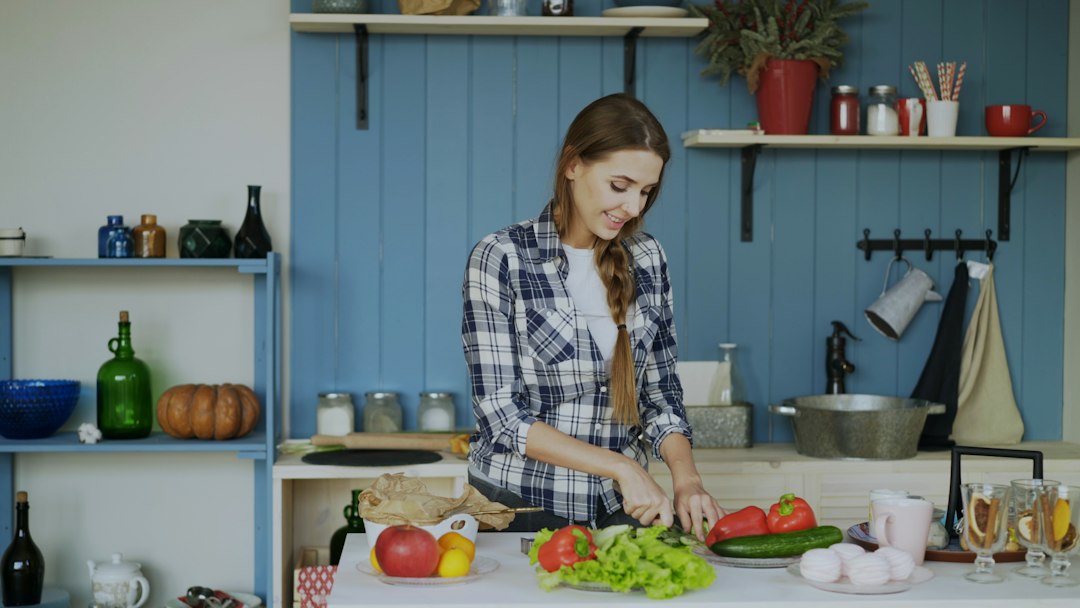
This habit is the backbone of an eat-at-home week. It turns chaos into a workable workspace and takes less time than scrolling for a delivery deal. Set a timer for 15 minutes, hit these steps, and stop when the timer rings. Done is the win.
Checklist for the kitchen reset:
- Clear the sink. Load or run the dishwasher, or stack dishes neatly. You’re creating landing space for prep.
- Wipe a single counter. One clean surface is enough to chop, assemble, or pack lunches.
- Put out your cutting board, knife, olive oil, salt, and pepper. Tools in sight invite action.
- Pull three items out of the fridge you can use in multiple meals: a bag of greens, a protein (eggs, cooked chicken, tofu), and a carb base (rice, tortillas, quinoa).
- Wash two produce items you’ll use all week like cucumbers and carrots. Don’t overthink. Rinse, dry, and place in a visible container.
That’s it. You didn’t cook a feast. You created a stage. With a clear surface and a few ready items, you reduce the friction between intention and dinner. Do this reset on Sunday night, then again midweek. If Sunday isn’t your day, pick any evening you tend to be home. Consistency matters more than the day of the week.
For deeper ideas on setting up your kitchen routine, especially if you’re trying to build cooking confidence, this practical guide can help: Healthy Cooking Habits: A Practical 12-Week Reset.
The 3-2-1 meal rhythm
The 3-2-1 rhythm is a simple way to plan meals without spreadsheets. You choose three bases, two proteins, and one flavor booster that you can combine in many ways. Prep or buy them once, then mix and match for days.
Choose three bases:
- Whole grains or starches: brown rice, quinoa, whole-wheat couscous, sweet potatoes, tortillas
- Leafy greens: spinach, arugula, or a mixed greens bin
- Hearty vegetables: roasted broccoli, peppers, or a bag of frozen stir-fry veg
Pick two proteins:
- Quick options: canned beans, eggs, rotisserie chicken, pre-cooked tofu, lentils, canned salmon
- If you cook on Sundays: bake chicken thighs, roast chickpeas, or simmer a pot of lentils
Add one flavor booster:
- Sauces: tahini-lemon, pesto, salsa, yogurt-herb
- Crunch: toasted nuts or seeds
- Brightness: lemon wedges, chopped cilantro, pickled onions
How it plays out: Monday lunch might be quinoa + spinach + chickpeas + lemon-tahini. Tuesday dinner could be tortillas + roasted peppers + scrambled eggs + salsa. Wednesday bowl: brown rice + frozen vegetables + chicken + pesto. This rhythm keeps choices fresh without requiring a brand-new recipe every day.
Want specific meal-prep combinations to plug in right away? See these time-saving ideas: Healthy Meal Prep Ideas for Busy Weeknights.
Smart grocery list: 10 core ingredients and easy swaps
Busy weeks reward predictable shopping. A short, repeatable grocery list means you can get in and out fast and still come home with versatile ingredients. Here’s a dependable starter list with flexible swaps:
- Greens: one clamshell of mixed greens; swap with kale or romaine
- Hearty veg: two bags frozen mixed veg; swap with frozen broccoli or peppers
- Quick protein: a dozen eggs; swap with tofu or canned beans
- Second protein: rotisserie chicken; swap with canned salmon or lentils
- Grain/starch: par-cooked rice or microwavable grain pouches; swap with whole-wheat tortillas
- Fruit: apples and berries; swap with oranges and grapes
- Healthy fats: olive oil and a small bag of mixed nuts
- Flavor booster: jar of pesto, salsa, or tahini
- Breakfast base: plain yogurt or unsweetened oat milk
- Hydration helpers: tea bags, lemon, or sparkling water
To save more time, keep a digital list in your notes app with these ten items and their potential swaps. Duplicate it weekly, check what you already have, and you’re done. Over time you’ll refine a personal list that works in every season.
Breakfast in 120 seconds
Two minutes is enough. Your future self cares less about variety and more about predictability you can execute while half-awake. Pick one to two options, set the ingredients in a single fridge zone, and repeat.
Fast, steady breakfasts:
- Yogurt bowl: plain yogurt + berries + nuts. Stir, eat. If dairy isn’t your thing, use a plant-based yogurt.
- Egg-and-greens wrap: scramble two eggs in a pan while a tortilla warms; throw in a handful of spinach and a spoon of salsa.
- Overnight oats: oats + milk + chia seeds + fruit. Make three jars at once.
- Peanut butter toast: whole-grain toast + peanut or almond butter + sliced banana + a pinch of cinnamon.
Upgrade moves that take seconds: a squeeze of lemon on fruit, cinnamon in coffee, or keeping a small jar of chopped herbs for eggs and wraps. Keep a spoon, bowl, and your go-to mug near the same cabinet so your hands move without thinking.
Lunches that travel well
Lunch fails when it leaks, wilts, or bores. You can fix all three with sturdy containers and consistent building blocks. The aim is a meal that feels fresh at noon but took five minutes at 8 a.m.
Packable combinations:
- Grain-and-greens bowl: layer cooked grain, greens, protein (beans, chicken, tofu), and a sauce. Keep a lemon wedge or small salsa cup for pop.
- Mason jar salad: dressing on the bottom, then hearty veg (cucumber, carrots), then protein, then greens on top. Flip into a bowl to eat.
- Leftover remix: taco filling turns into a bowl over rice; roasted veg become a warm wrap with hummus.
- Soup-and-snack: a thermos of veggie soup plus a side of fruit and a handful of nuts.
Store a small kit at work: fork, spoon, napkins, hot sauce, herbal tea. When lunch is easy and tasty, the afternoon is smoother. No post-lunch slump from random vending-machine choices, and no time lost to indecision.
20-minute dinners: sheet pan, stir-fry, skillet
On weeknights, speed matters more than novelty. The fastest dinner is the one you already know how to make with whatever is in your fridge. Use these three templates to cover almost any ingredient set you have on hand.
Sheet pan formula:
- Choose a protein that cooks fast: shrimp, chicken tenders, chickpeas
- Add vegetables that roast quickly: broccoli florets, peppers, zucchini
- Toss with olive oil, salt, pepper, and a spice blend (smoked paprika, Italian herbs)
- Roast at high heat while you tidy the kitchen reset
Stir-fry formula:
- Heat a skillet, add oil and aromatics (garlic, ginger)
- Add your protein (tofu, chicken, eggs), then a bag of frozen vegetables
- Finish with soy sauce, lime, or a store-bought stir-fry sauce
- Serve over microwaved rice pouches if you didn’t cook rice earlier
Skillet pasta or grain bowls:
- Cook pasta or warm a quick grain
- Sauté tomatoes, spinach, and garlic
- Stir in beans or canned salmon for protein
- Finish with olive oil and lemon or a spoon of pesto
If you’re drawn to Mediterranean flavors and like planning a week at a time, here’s a practical template you can adapt: Mediterranean diet meal prep: a practical 7-day blueprint. It pairs beautifully with the 3-2-1 rhythm above.
Energy, stress, and sleep: the invisible trio
Food matters, but so do sleep, stress, and energy rhythms. When these are out of tune, the day feels harder and every choice costs more. You don’t need a perfect routine to feel better. You need a reliable baseline you can return to.
Energy basics that fit busy days:
- Morning light: step outside for five minutes soon after waking. It helps your body clock align with the day.
- Steady meals: don’t skip breakfast if skipping makes you foggy; eat a balanced plate with protein and produce at regular times.
- Hydration: keep a water bottle where you work. Add lemon or tea if you get bored.
- Movement breaks: two to three short walks or stair sessions can lift your mood and focus.
Care for stress without elaborate routines:
- One-minute check-in: close your eyes, exhale slowly, unclench your jaw and hands. Repeat in the car before you walk into the house.
- Boundary habit: pick one daily boundary that protects your attention, like silencing nonessential notifications for 90 minutes.
- Micro-downtime: pair your afternoon tea or water refill with three slow breaths and a glance out a window.
Sleep support that busy people can keep:
- Shutdown ritual: 15 minutes before bed, park your phone in another room and write tomorrow’s top three tasks on paper.
- Same wake time: aim for a consistent wake-up most days, even if bedtime varies.
- Cool, dark, quiet: small things help like a fan, an eye mask, or blackout curtains.
These resources dig deeper into each pillar if you want a practical refresher you can use right away: Discover How to Naturally Increase Your Energy Levels, Unlock Your Health Potential: Sleep Ready to Restore and Recharge, and Learn to Manage Stress for Optimal Well-Being.
Movement that fits a crowded day
I used to believe a workout only counted if it required a change of clothes and a dedicated hour. Then I had a month of nonstop travel and kept my energy up with ten-minute walking sessions, bodyweight moves in hotel rooms, and a yoga mat next to my bed. It changed my mind. Motion snacks add up.
Practical ways to move when you have no time:
- Bookend walks: five to ten minutes after breakfast and after dinner. Add a third walk while coffee brews.
- Stair bursts: two flights up and down between meetings.
- Desk routine: every 90 minutes, stand, raise your arms overhead, roll your shoulders, and do ten bodyweight squats.
- TV routine: put a resistance band next to the remote. Do a simple pull-apart or press sequence for one segment.
If you want to understand how movement supports your well-being and how to place it into your day without fuss, this explainer is helpful: Get Fit, Get Healthy: Understand the Role of Exercise in Your Life.
Habit architecture: stacking, friction, and checkpoints
Habits don’t stick because a book says they should. They stick because your environment and schedule nudge you into repeating them. Three design ideas matter most: stack habits onto existing ones, lower friction for good choices, and add checkpoints so you don’t drift for weeks without noticing.
Habit stacking:
- After I start the coffee maker, I fill my water bottle.
- After I close my laptop at lunch, I step outside for five minutes.
- After I park the car in the evening, I put tomorrow’s gym shoes by the door.
Friction management:
- Put healthy foods at eye level and pre-cut vegetables into clear containers.
- Store chips or sweets in an opaque bin on a high shelf if you want them less often.
- Keep a fruit bowl on the counter and a bowl of nuts next to where you keep your keys.
Checkpoints:
- Sunday five-minute review: what went well, what felt hard, and one small adjustment for the next week.
- Monthly pantry reset: toss stale items and restock basics you actually use.
- Quarterly kitchen deep clean: sharpen knives, replace worn cutting boards, and check storage lids.
The point is not to be perfect. The point is to tilt your space and your schedule so that the easy thing is also a good thing. Once your defaults are set, you win by showing up, not by heroics.
When life happens: travel, holidays, and setbacks
There will be weeks when the plan wobbles. That’s not failure; it’s a feature of being human. Build a backpack version of your habits so you can keep your footing even when your routine changes.
Travel kit:
- Small container of nuts, a few tea bags, and a protein bar you actually like
- Foldable water bottle
- Resistance band for hotel-room strength moves
- Short list of nearby groceries you can buy anywhere: yogurt, fruit, pre-cut vegetables, pre-cooked grains
Holiday approach:
- Keep one anchor habit (morning light, a short walk, or the two-minute breakfast).
- Use a mini kitchen reset even in a rental: clear a counter, set out a knife and board, put fruit in a bowl.
- Decide what you want to enjoy fully and what you’re fine keeping light. Agency calms decision fatigue.
Getting back on track:
- Start with the kitchen reset. It creates momentum.
- Pick one meal to stabilize first (often breakfast).
- Take one short walk. Win today, then stack tomorrow.
The 8-week playbook
Here’s a realistic ramp that respects work, kids, travel, and the occasional surprise. No leaps. Just one to three moves each week. If a week gets messy, repeat it. The calendar is a suggestion; the goal is a sturdy base you can keep forever.
Week 1: Setup your anchors
- Do the 15-minute kitchen reset twice.
- Choose your 3-2-1 meal rhythm pieces for the week and write them on a sticky note.
- Pick one two-minute breakfast and make it every day.
- Take one five-minute walk after dinner three times.
Week 2: Lunch that doesn’t leak
- Buy two sturdy containers if you don’t have them.
- Pack two grain-and-greens bowls this week using your 3-2-1 items.
- Add a Sunday or Monday grocery trip with the ten-item list.
- Write and post a water reminder in your workspace.
Week 3: Dinner templates
- Use a sheet pan dinner twice.
- Do one stir-fry night with frozen veg and eggs or tofu.
- Try a skillet pasta or grain bowl once.
- Keep sauces simple: lemon, olive oil, salt; or pesto; or salsa.
Week 4: Energy and sleep baseline
- Step outside within an hour of waking for five minutes most days.
- Write down a 15-minute shutdown ritual and practice it four nights.
- Add one movement snack to the afternoon: stairs, bands, or a brisk walk.
Week 5: Stack and simplify
- Pick two habit stacks (coffee → fill bottle; park car → set out shoes).
- Move one friction point (fruit in a bowl; chips in a bin).
- Do a five-minute Sunday review. Adjust one thing.
Week 6: Build your travel kit
- Assemble your travel bag (nuts, tea, protein bar, foldable bottle, band).
- Find a quick grocery combo you like when away from home.
- Keep your anchor habit even on the road (walk, light, or breakfast).
Week 7: Flavor and fun
- Learn one new sauce: tahini-lemon, yogurt-herb, or a bright salsa verde.
- Try one new vegetable or herb and add it to your 3-2-1 rotation.
- Invite someone to a short walk-and-talk instead of a sit-down chat.
Week 8: Maintenance mode
- Choose two habits that felt best and lock them in with visual cues.
- Schedule your monthly pantry reset and quarterly kitchen deep clean.
- Write a one-page cheat sheet with your go-to breakfasts, lunches, dinners, and movement snacks. Post it inside a cabinet.
By the end of Week 8, you’ll have a personal system that runs under stress. No single piece is heroic. Together, they carry you.
How to personalize without complicating
People often complicate plans in the name of personalization. True personalization is subtractive: you remove steps you won’t do and keep the skeleton that works. A few guidelines to help you edit wisely:
- Start from constraints: time, budget, kitchen gear, commute. Pick habits that respect those limits.
- Use palettes, not strict menus. The 3-2-1 rhythm is a palette; you choose the colors each week.
- Prefer one-size-fits-you containers (same bowl, same mug). Reducing variety in tools reduces friction.
- Let seasons do the rotating for you: berries in summer, citrus in winter, soups when it’s cold, salads when it’s warm.
When in doubt, cut a step. Your plan should survive a crisis call, a flight delay, and a deadline. If it only works on quiet days, it isn’t your plan yet.
Common obstacles and simple fixes
Every plan meets the same roadblocks. The trick is to respond with a small adjustment instead of a big overhaul. Here are grounded fixes that don’t require overthinking.
No motivation after work:
- Use the kitchen reset before you start work or as soon as you get home. A clean surface changes behavior.
- Start with a five-minute timer. Tell yourself you can stop when it rings. You probably won’t.
Kids or partners who don’t want the same food:
- Use the 3-2-1 base-and-top format. Everyone shares the base; toppings vary.
- Let sauces carry variety. One base, three sauces, three moods.
Travel or late nights that blow up dinner:
- Make breakfast and lunch your anchors that day. Dinner can be simple or takeout.
- Pack a snack that keeps well so you aren’t at the mercy of the nearest option.
Lack of cooking skills:
- Master a knife, a pan, and an oven set to high heat. You don’t need finesse for weeknights.
- Lean on frozen vegetables, pre-cooked grains, and canned proteins while you practice.
Food budget concerns:
- Buy store brands for basics (grains, beans, frozen veg). Save flavor money for herbs, citrus, and sauces.
- Cook one pot of lentils or beans weekly. They’re inexpensive and flexible.
Your quick-reference checklists
Copy these into your notes app and check them on autopilot.
Daily:
- Two-minute breakfast
- Water bottle filled three times
- One movement snack before lunch, one after
- Five-minute evening walk or stretch
- Shutdown ritual: phone parked, top three tasks written
Weekly:
- 15-minute kitchen reset twice
- Ten-item grocery run
- Two 20-minute dinners from templates
- Sunday five-minute review
Monthly:
- Pantry reset
- Rotate a new sauce or herb
- Replace worn kitchen tools (sponges, peeler, storage lids)
Mindset notes that save you time
People who look effortless aren’t more disciplined; they’re more designed. They make their homes and calendars do the heavy lifting, then they ride the groove. A few reminders I return to when life gets loud:
- Don’t aim for impressive. Aim for repeatable.
- Make the good thing the easy thing.
- Timebox prep. A timer is kinder than an ambitious recipe.
- Stack wins early in the day. A calm morning forgives an unpredictable afternoon.
- Be on your own side. Curiosity beats self-criticism when you miss.
If you want to expand your skills after this playbook, pick one project at a time: learn a new sheet pan combo, try a different breakfast, or set a better boundary with notifications. Layer slowly. The goal isn’t a perfect plan; it’s a plan that keeps moving with you.
Put it together today
Take five minutes right now. Clear the sink, wipe a counter, set out your cutting board, knife, olive oil, salt, pepper, and a bag of greens. Decide on tomorrow’s two-minute breakfast. Fill your water bottle. Then put your shoes by the door for a morning walk. That’s your whole day set up in small choices.
When it feels like the day is running you, return to these anchors. One clear surface. One simple breakfast. One short walk. One 20-minute dinner. Repeat until your life starts feeling a little roomier. That’s how healthy living fits a busy calendar: not with drama, but with steady moves you can keep.